






Medical bills can feel final once insurance has paid its part, but that balance is not always the amount you truly need to pay. Learning how to negotiate medical bills after insurance can help you catch billing errors, question unfair charges, ask for financial assistance, and work out a lower payment before the bill becomes a bigger problem.
In the US, patients often receive confusing statements from hospitals, clinics, labs, and insurance companies, so the best move is to slow down, compare every document, and negotiate from a place of proof instead of panic.
Can You Negotiate a Medical Bill After Insurance Pays?
Yes, you can often negotiate the remaining balance after insurance has processed the claim. The provider may reduce the bill, correct errors, approve financial assistance, offer a hardship discount, or set up an interest-free payment plan. Many billing departments would rather collect a lower reasonable amount than risk delayed payment, unpaid debt, or collections.
Before negotiating, make sure the insurance company has finished processing the claim. If you negotiate too early, the balance may still change. Wait for your Explanation of Benefits, also called an EOB, and compare it with the provider’s bill. The EOB usually shows what the provider charged, what the insurance plan allowed, what insurance paid, and what you may owe.
Start With an Itemized Medical Bill
The first real step is to request an itemized bill from the hospital, clinic, surgery center, lab, or doctor’s office. A regular summary bill may only show a total balance, but an itemized bill breaks down each service, supply, medication, room charge, lab test, and procedure.
Ask the billing department to include CPT or HCPCS codes where available. These codes help you understand what you were charged for and make it easier to compare the bill with your insurance paperwork.
The CMS Physician Fee Schedule tool can also help you research Medicare payment information by CPT or HCPCS code, locality, and year, although it is mainly a reference tool rather than a guaranteed private-insurance price.
Compare the Bill With Your EOB
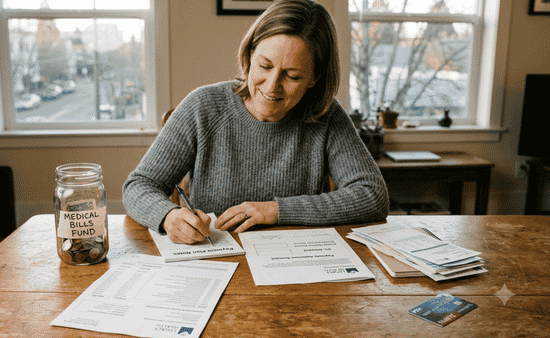
This is where many patients find problems. Your provider bill and EOB should match in basic details. The date of service, provider name, procedure, insurance adjustment, insurance payment, and patient responsibility should make sense.
Focus on the allowed amount and patient responsibility. The provider may charge a large original amount, but your insurance plan may allow a lower negotiated amount. You generally should not be asked to pay more than your valid patient responsibility after insurance rules, deductibles, copays, coinsurance, and network terms are applied.
If the EOB says you owe one amount and the provider bill says you owe another, call both the provider and the insurer. Ask whether the claim was processed correctly, whether the provider used the correct billing code, and whether the provider needs to rebill insurance.
Look for Common Medical Billing Errors
Medical billing mistakes are common enough that you should review every line carefully. Look for duplicate charges, cancelled services, medications you never received, tests that were not performed, incorrect room charges, wrong dates, or charges that look unusually high.
Also watch for upcoding, which happens when a provider bills for a more expensive service than the one actually provided. If something looks wrong, do not start negotiating yet. First, dispute the error and ask the billing office to correct the balance.
Negotiating from an incorrect bill can make you agree to pay money you never owed. Taking the time to review and correct billing errors is also a practical strategy for how to save money when bills are more than income, as it prevents unnecessary expenses and helps you direct limited funds toward essential financial obligations.
Ask About Financial Assistance Before Paying
If the bill is from a nonprofit hospital, ask about financial assistance or charity care. The IRS says tax-exempt hospital organizations must have written financial assistance policies, and financial assistance may include free or discounted care for eligible patients who cannot pay all or part of their bill.
Do not assume you earn too much to qualify. Some hospitals have sliding-scale programs, hardship discounts, uninsured discounts, underinsured support, or payment relief based on family size and income. Ask for the application, required documents, deadline, and review timeline.
While your application is under review, ask the billing department to place your account on hold. This matters because you do not want the bill moving toward collections while you are actively applying for help.
Use Smart Negotiation Strategies
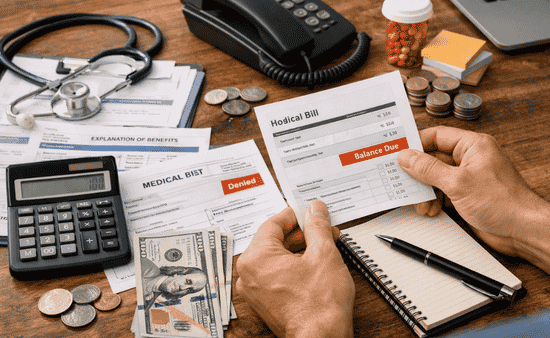
Once the bill is verified, you can negotiate the balance. Start by asking whether the provider offers a prompt-pay discount, hardship reduction, or settlement discount. If you have some cash available, you may offer a lump-sum settlement.
For example, you can ask whether the provider would accept 20% to 40% of the remaining balance as full payment. Not every provider will accept that range, but it gives you a starting point.
You can also ask for the self-pay or uninsured cash rate. Sometimes a patient with insurance ends up seeing a higher out-of-pocket balance than a cash-pay patient would have been quoted. If the cash rate is lower, use it as a reasonable comparison during negotiation.
Another smart move is to research fair pricing before calling. Use Medicare rates, hospital price transparency pages, insurer tools, or independent medical cost estimators to understand what a reasonable charge might look like in your area. This gives you confidence and prevents the conversation from becoming emotional.
What to Say to the Billing Department
When calling, stay calm and specific. You can say: “I reviewed my itemized bill and EOB, and I want to resolve this balance. The amount is more than I can afford. Are there any discounts, financial assistance options, or settlement amounts available if I pay part of it now?”
If the first representative cannot help, ask for a supervisor, patient advocate, financial counselor, or hospital billing manager. Take notes during every call. Write down the date, time, name of the person you spoke with, and what they promised.
Know Your Surprise Billing Rights
If the bill involves emergency care or an out-of-network provider at an in-network facility, check whether the No Surprises Act applies. CMS explains that the law provides federal protections against certain surprise medical bills and limits balance billing in situations where patients often cannot choose an in-network provider.
This is important for emergency rooms, anesthesiology, radiology, pathology, air ambulance services, and certain out-of-network care at in-network hospitals. If you think the bill violates these protections, contact the provider, insurer, and the No Surprises Help Desk before paying.
Appeal Insurance Problems

Sometimes the provider bill is high because insurance denied part of the claim. In that case, negotiation with the provider may not be enough. Call your insurance company and ask why the claim was denied or reduced. It may be due to missing records, incorrect coding, lack of prior authorization, network status confusion, or medical necessity review.
Ask how to appeal the decision and what documents are needed. A corrected claim, letter of medical necessity, referral record, or provider note may help get the claim reprocessed.
Set Up a 0% Payment Plan
If the provider will not reduce the bill enough, ask for a monthly payment plan with no interest. Tell them what you can realistically afford each month. Do not agree to a payment amount that will make rent, food, utilities, or other essentials harder to cover.
Avoid putting medical debt on a high-interest credit card. Once you move the balance to a card, you may lose access to hospital financial assistance, billing corrections, or flexible provider payment options. Kiplinger also advises caution with credit cards for medical bills because interest can make the debt harder to manage.
Get Every Agreement in Writing
This step is non-negotiable. Before making a settlement payment, ask the billing department to send a written agreement showing the reduced amount, due date, account number, and confirmation that the payment satisfies the agreed balance.
If you agree to a payment plan, get the monthly amount, number of payments, interest terms, and collection status in writing. Keep copies of bills, EOBs, emails, letters, screenshots, and payment receipts.
Frequently Asked Questions (FAQs)
1. Can I negotiate a hospital bill after insurance has already paid?
Yes, you can still negotiate the remaining patient balance after insurance pays, especially if you find errors, qualify for financial assistance, or can offer a settlement.
2. What is the first thing I should ask for?
Ask for an itemized bill with billing codes, then compare it with your EOB before paying or negotiating.
3. Can a medical bill go to collections while I apply for financial assistance?
It can happen, so ask the billing department to pause collection activity while your application is under review.
-
Is it better to pay a medical bill with a credit card?
Usually, no. A provider payment plan or negotiated settlement is often safer than turning medical debt into high-interest credit card debt.
Final Thoughts
Learning how to negotiate medical bills after insurance is really about slowing down before you pay. I would never treat the first balance as final until I reviewed the EOB (An explanation of benefits), requested an itemized bill, checked for errors, asked about charity care, and tried to negotiate directly with the billing department.
In many cases, the patient who asks clear questions, stays organized, and gets the final agreement in writing has a better chance of lowering the balance and avoiding unnecessary financial stress.